
Everest Base Camp Trek: Complete Guide for Independent Trekkers
How to plan and trek to Everest Base Camp without a guided tour: permits, costs, the best time to go, getting to Lukla, altitude, and gear, from two people who did it themselves.
When my partner and I decided to trek to Everest Base Camp in April 2024, we chose to do the whole thing independently, with no guided tour and no porter. It turned out to be far easier to organize than we expected, and this guide is everything we wish we'd had in one place before we left: how the permits work, what it actually costs, when to go, how to get to Lukla, and how to deal with the altitude.
This is the practical planning companion to our day-by-day Everest Base Camp trip report, where you can read exactly where we stayed and what each day was like. When you're ready to build your own plan, you can create a custom EBC itinerary in our planner and browse every teahouse along the route.
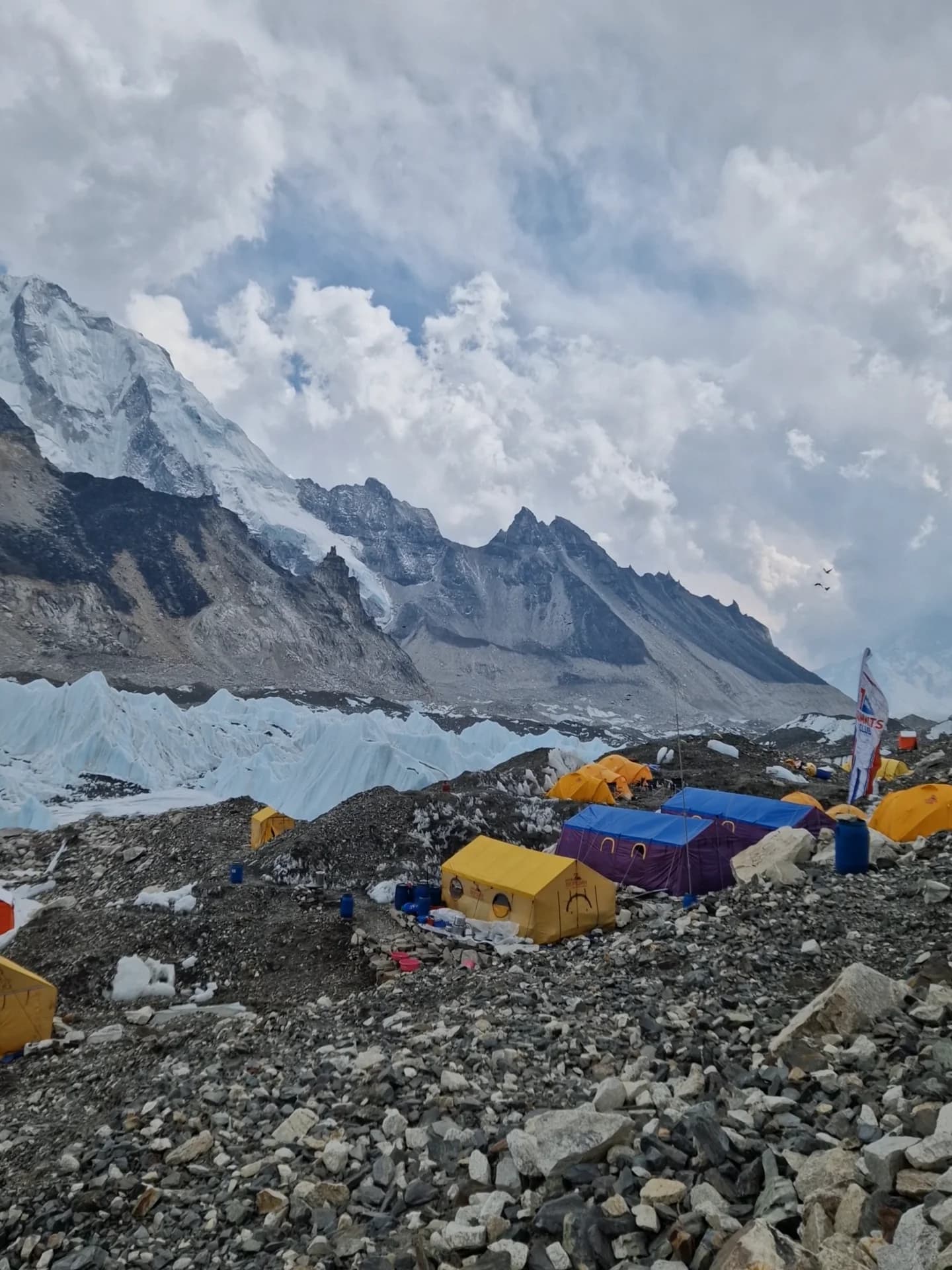
View of Everest Base Camp
Everest Base Camp trek at a glance
- Location: Khumbu (Everest) region, Sagarmatha National Park, Nepal
- Everest Base Camp elevation: (the highest sleeping point is Gorakshep at 5,164 m, and the classic viewpoint of Kala Patthar reaches )
- Distance: roughly round trip from Lukla
- Duration: 12–14 days round trip, including acclimatization days
- Difficulty: strenuous but non-technical; the challenge is altitude, not the terrain
- Best time: autumn (late Sep–Nov) and spring (Mar–May)
- Guide required? No. The Khumbu region does not enforce Nepal's guide rule, so EBC is very doable independently
- Permits: Khumbu Pasang Lhamu Rural Municipality permit + Sagarmatha National Park entry permit
Do you need a guide for Everest Base Camp?
No, you can legally and safely trek to Everest Base Camp without a guide. In 2023 Nepal introduced a rule requiring a licensed guide for trekkers in many regions, but the Khumbu (Everest) region opted out and runs its own local permit system instead. Throughout our entire trek we were never once asked about a guide at any checkpoint.
The trail itself is one of the reasons this is so achievable independently: it's a well-established path connecting villages, busy with other trekkers, with no technical sections and even stone steps in many places. With an offline GPS map on your phone it's very hard to get lost.
A guide does have benefits: you arrange almost nothing yourself and always have someone to ask about your surroundings. The trade-off is cost, flexibility and, for us the biggest one, connection. Trekking independently meant we booked our own teahouses, ordered our own dal bhat and talked directly with the families who run them, rather than having a guide do it all for us. If you want our honest take on the safety question, we cover it in detail in the trip report.
How to get to Everest Base Camp
The trek begins in Lukla, a mountain village reached by a short, spectacular flight from Kathmandu. In the busy spring and autumn seasons these flights usually leave not from Kathmandu itself but from Ramechhap (Manthali), a 4–5 hour drive away. Most Kathmandu agencies arrange a shared minivan transfer that leaves the city around 1 a.m. to make the early flights, and ours was a bumpy overnight ride.
Be warned that Lukla flights are weather-dependent and delays of a day or more are common. Our own flight was delayed all day and eventually cancelled to the next morning, so build a spare day or two into your plans on both ends. You can buy tickets directly from the airlines (we used Tara Air); outside peak season, direct Kathmandu–Lukla flights sometimes run too.
From Lukla, the walk to Everest Base Camp takes about 8 days one way through Namche Bazaar, Tengboche, Dingboche, Lobuche and Gorakshep, then you return the same way to fly out of Lukla.
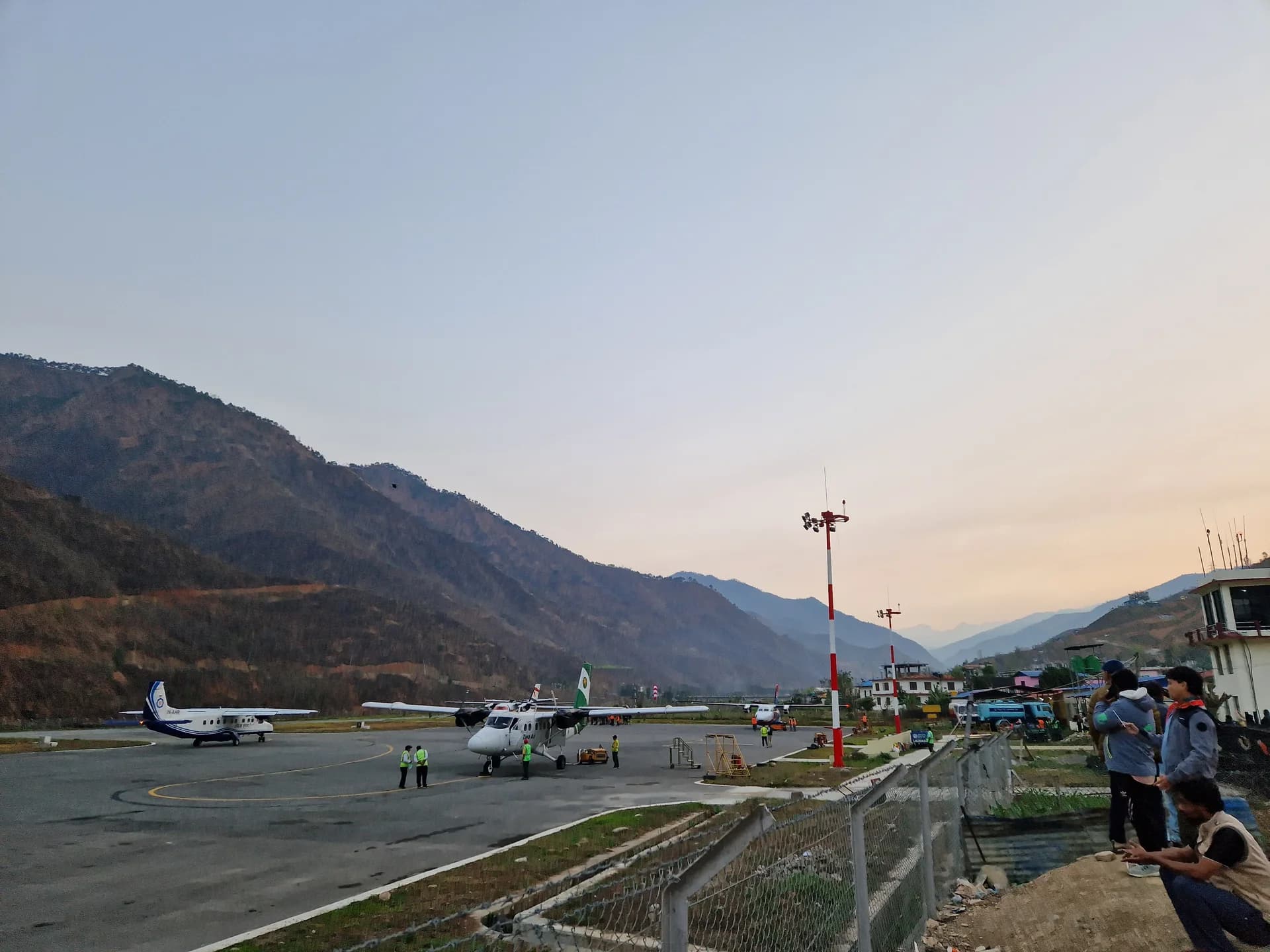
Waiting at Ramechhap Airport for our flight to Lukla
Best time to trek to Everest Base Camp
There are two prime seasons:
- Autumn (late September–November) is the most popular window, with the clearest skies, stable weather and excellent mountain views. It's also the busiest.
- Spring (March–May) is warmer, with rhododendrons flowering at lower altitudes and longer days. This is when we went, and the weather was mostly superb with fresh snow on the peaks.
Avoid the monsoon (June–August), when cloud, rain, mud and frequent flight delays make for a frustrating trek, and be prepared for very cold temperatures, deep snow and possible closures in winter (December–February). Whenever you go, nights above 4,000 m are cold year-round, so a warm sleeping bag is essential.
How hard is the Everest Base Camp trek?
The Everest Base Camp trek is strenuous but not technical. There's no climbing, scrambling or exposure on the way to base camp. What makes it hard is the combination of distance and altitude: you walk 5–6 hours a day for around two weeks, and much of it is spent above 4,000 m, where the air holds roughly half the oxygen it does at sea level.
That means acclimatization is the single most important part of your plan. Don't rush it. We include at least two acclimatization days (we took ours at Namche Bazaar and Dingboche), where you climb higher during the day and sleep lower. Even so, both of us started feeling rough approaching Lobuche at nearly 5,000 m, so we cut the day short and added an easy semi-rest day, which sorted us out completely.
If you do feel unwell, tell your teahouse; they deal with altitude sickness daily and can arrange a helicopter evacuation if needed. Make sure your travel insurance covers helicopter rescue and trekking to 5,600 m. With sensible pacing, the trek is well within reach of most reasonably fit hikers.
Everest Base Camp trek cost
One of the best things about going independently is how affordable it is: you pay for flights, permits, food and lodging as you go, rather than an all-in package. Here's a rough per-person guide based on what we spent (everything on the trail is cash only, in Nepalese rupees, so bring enough from Kathmandu, as mountain ATMs are unreliable and cap withdrawals):
| Item | Approx. cost (per person) |
|---|---|
| Permits (both) | ~$45 |
| Round-trip Lukla flight | $350–450 |
| Teahouse room | $4–8 per night |
| Food & drink | $25–40 per day (rising with altitude) |
| Crampons, gear odds and ends | $20–50 |
| Independent total (trek only) | ~$600–1,200 |
For comparison, a guided EBC package typically costs $1,400–3,000+. Doing it yourself is dramatically cheaper. The basic meals cost much the same for everyone, so the real variables are the Lukla flight and the extras: desserts, endless pots of tea, snacks and hot showers, all of which get pricier the higher you climb.
Permits for the Everest Base Camp trek
You need two permits for EBC, and no TIMS card is required in the Khumbu:
- Khumbu Pasang Lhamu Rural Municipality permit: around $15, funding local infrastructure and communities.
- Sagarmatha National Park entry permit: around $25–30, for the national park.
We bought both at the checkpoint in Monjo on our second day; you can also get the municipality permit in Lukla and the park permit in Kathmandu. Prices are set in rupees and change over time, so treat these as a guide. Keep both permits on you, as you'll be asked to show them at checkpoints along the way.
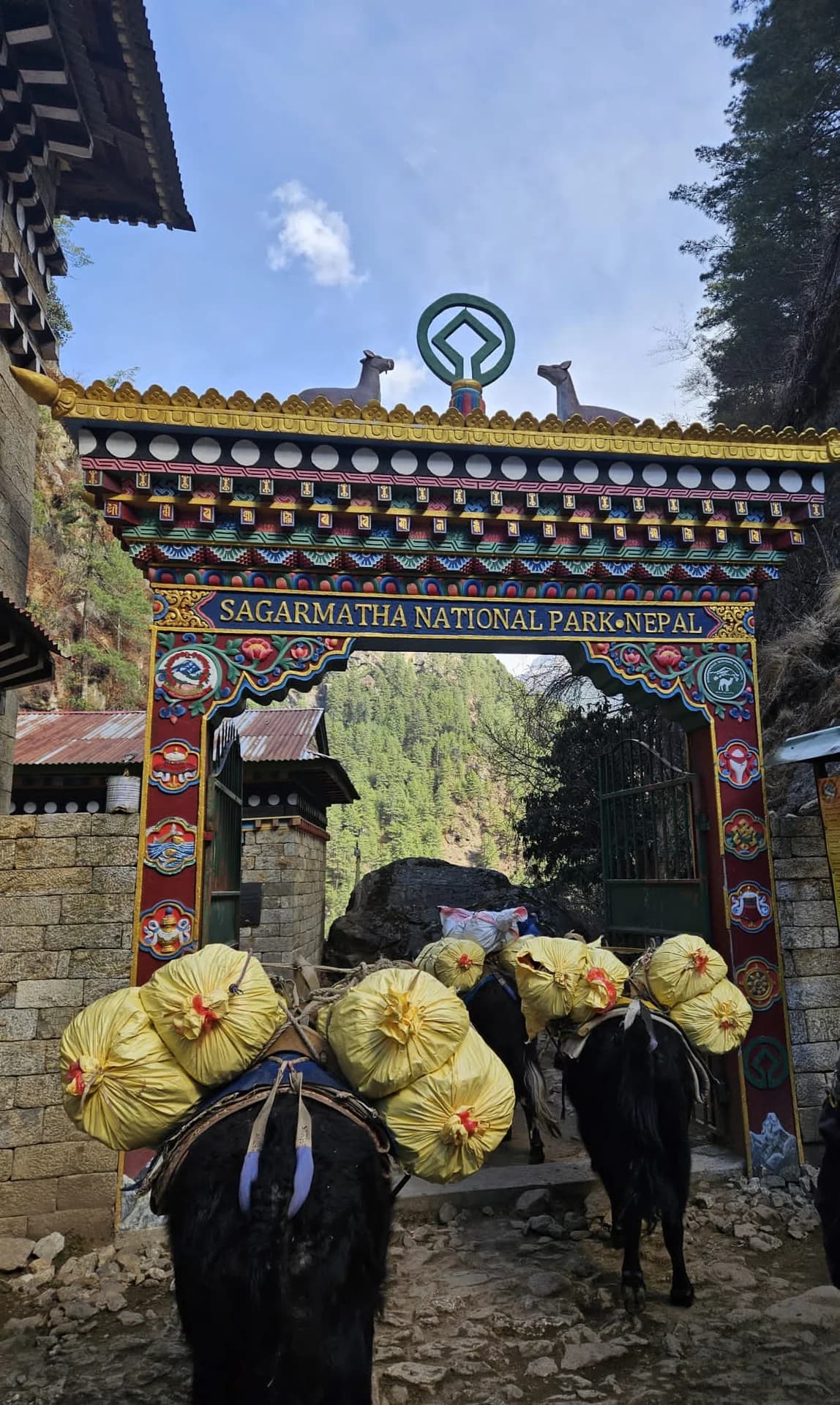
Entering Sagarmatha National Park
Accommodation: teahouse trekking on the EBC route
The Everest Base Camp trek is a classic teahouse trek: you sleep in family-run lodges in the villages along the route, so there's no need to carry a tent or food. A typical room is simple, with two beds, a shared (sometimes private) bathroom, and a warm communal dining room that's the social heart of each teahouse. You're expected to eat dinner and breakfast where you sleep, and dal bhat is the reliable, refillable staple.
Booking is easy to do yourself. As we hiked, we messaged each village's teahouses over WhatsApp a day or two before arriving to reserve a room and check prices, and most reply the same day. For most stops you can simply turn up, but for the last villages before base camp, especially Gorakshep, book a few days ahead and reconfirm the day before. We always had a room waiting, while we met trekkers on guided tours who ended up sleeping in dining rooms. You can browse and compare every lodge on the route in our accommodation planner.
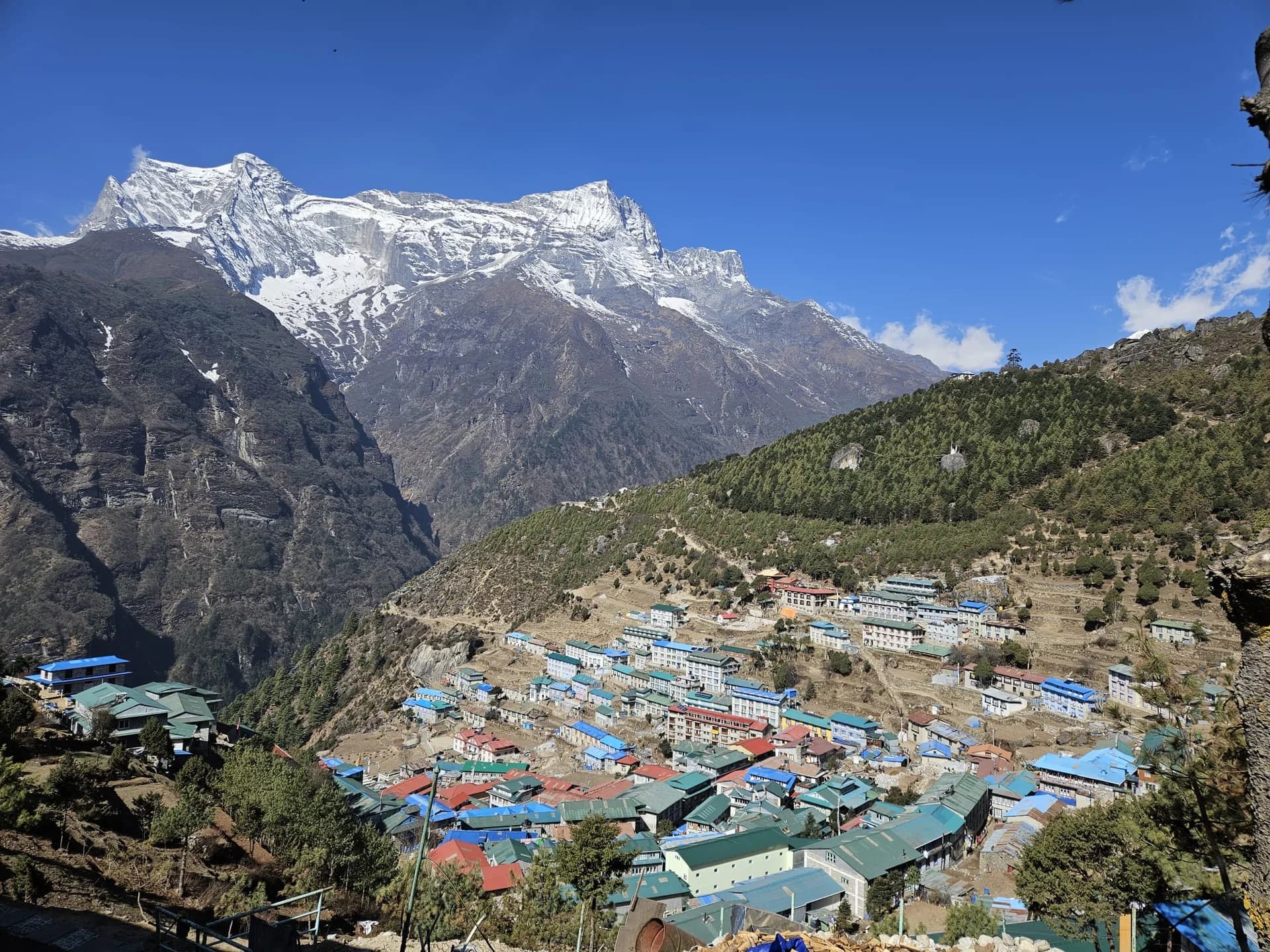
Looking out over Namche Bazaar
Training and preparation
You don't need to be an athlete, but arriving fit makes the trek far more enjoyable. In the months before you go, focus on cardio and endurance such as running, cycling and stair-climbing, and do some longer hikes carrying a loaded daypack so your legs and shoulders are used to consecutive days on the trail. Altitude can't really be trained for at sea level, which is why your itinerary matters more than your fitness: give yourself the acclimatization days and you'll cope far better than someone super-fit who rushed up.
A few practical preparations we were glad we'd made: travel insurance with high-altitude helicopter cover, plenty of cash in rupees, an offline GPS map downloaded before losing signal, and a broken-in pair of boots.
What to pack
A full packing list is its own topic, but the essentials that matter most on EBC:
- A sleeping bag rated close to freezing, since teahouse rooms are unheated and cold at night
- Layers: base layers, a warm insulated jacket, and a waterproof shell
- Crampons if you're crossing to Gokyo over the Cho La Pass; we bought a cheap pair in Namche Bazaar for about $20
- Cash in Nepalese rupees for the whole trek
- An offline GPS app (we used a downloaded GPS map) and a power bank
- Water purification, sun protection and a basic first-aid and altitude kit
Choosing your itinerary
Most trekkers follow the classic 12–14 day round trip from Lukla to Everest Base Camp and back. If you have more time, the standout extension is continuing over the Cho La Pass to the Gokyo Lakes, where quieter trails, turquoise lakes and the sunrise from Gokyo Ri were our favorite part of the whole trip. You can read that leg in our Gokyo Lakes via the Cho La Pass guide. The most ambitious option links all three high passes as the Everest Three Passes trek.
Here's the classic route we followed. You can open it in the planner to adjust the pace and add your own acclimatization days:
Ready to organize your own trek? Build your Everest Base Camp itinerary, browse every teahouse along the way, and download the route, then follow our day-by-day trip report to see how it all comes together on the trail.
Frequently asked questions
Do you need a guide for the Everest Base Camp trek?
No. Although Nepal introduced a nationwide guide rule in 2023, the Khumbu (Everest) region does not enforce it and instead uses a local permit system. You can legally trek to Everest Base Camp independently, without a guide or porter. You just need the two Khumbu permits, and we did the whole trek this way and were never asked for a guide.
How much does the Everest Base Camp trek cost?
Trekking independently, budget roughly $600–1,200 for the trek itself: about $45 in permits, a round-trip Lukla flight of $350–450, and $30–45 a day for teahouses and food, excluding international flights and gear. Guided packages typically run $1,400–3,000+. Costs rise the higher you go, and everything on the trail is cash only, in Nepalese rupees.
What is the best time to trek to Everest Base Camp?
The two best seasons are autumn (late September to November), with the clearest skies and most stable weather, and spring (March to May), which is warmer with rhododendron blooms. That is when we went. Avoid the June to August monsoon (cloud, rain and flight delays), and expect very cold temperatures and possible closures in winter.
How do you get to Everest Base Camp?
The trek starts in Lukla, reached by a short mountain flight from Kathmandu. In peak season these usually depart from Ramechhap, a 4–5 hour drive from Kathmandu. From Lukla you walk to Everest Base Camp over about 8 days via Namche Bazaar, Tengboche, Dingboche and Gorakshep, then return the same way to fly out of Lukla.
How high is Everest Base Camp and how hard is the altitude?
Everest Base Camp sits at 5,364 m (17,598 ft), and nearby Kala Patthar reaches 5,550 m. The altitude, not the terrain, is the real challenge: the air holds roughly half the oxygen of sea level. Building in acclimatization days and ascending slowly is essential to avoid altitude sickness. We felt it near Lobuche and took an extra rest day, which made all the difference.
How many days do you need for the Everest Base Camp trek?
Plan on 12–14 days round trip from Lukla, including at least two acclimatization days. Adding the Gokyo Lakes via the Cho La Pass makes it about 15–18 days. Faster itineraries exist but significantly raise the risk of altitude sickness, so we would always err toward more days.
Can you trek to Everest Base Camp without training?
You don't need to be an athlete, but you shouldn't arrive untrained. EBC means 5–6 hours of walking a day for two weeks at altitude. A few months of regular cardio and some hikes with a loaded pack make a big difference to how much you enjoy it, and to how well your body copes with the thin air.