
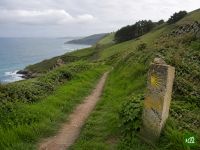
Camino de Santiago (Camino del Norte)
Also known as Northern Way
About Camino de Santiago (Camino del Norte)
The coastal pilgrimage route to Santiago, following the Bay of Biscay from the Basque border through Cantabria and Asturias before turning inland across Galicia. It trades the meseta of the busier Caminos for sea cliffs, fishing harbours and green hill country, with beaches within reach of many stages.
Camino de Santiago (Camino del Norte) map
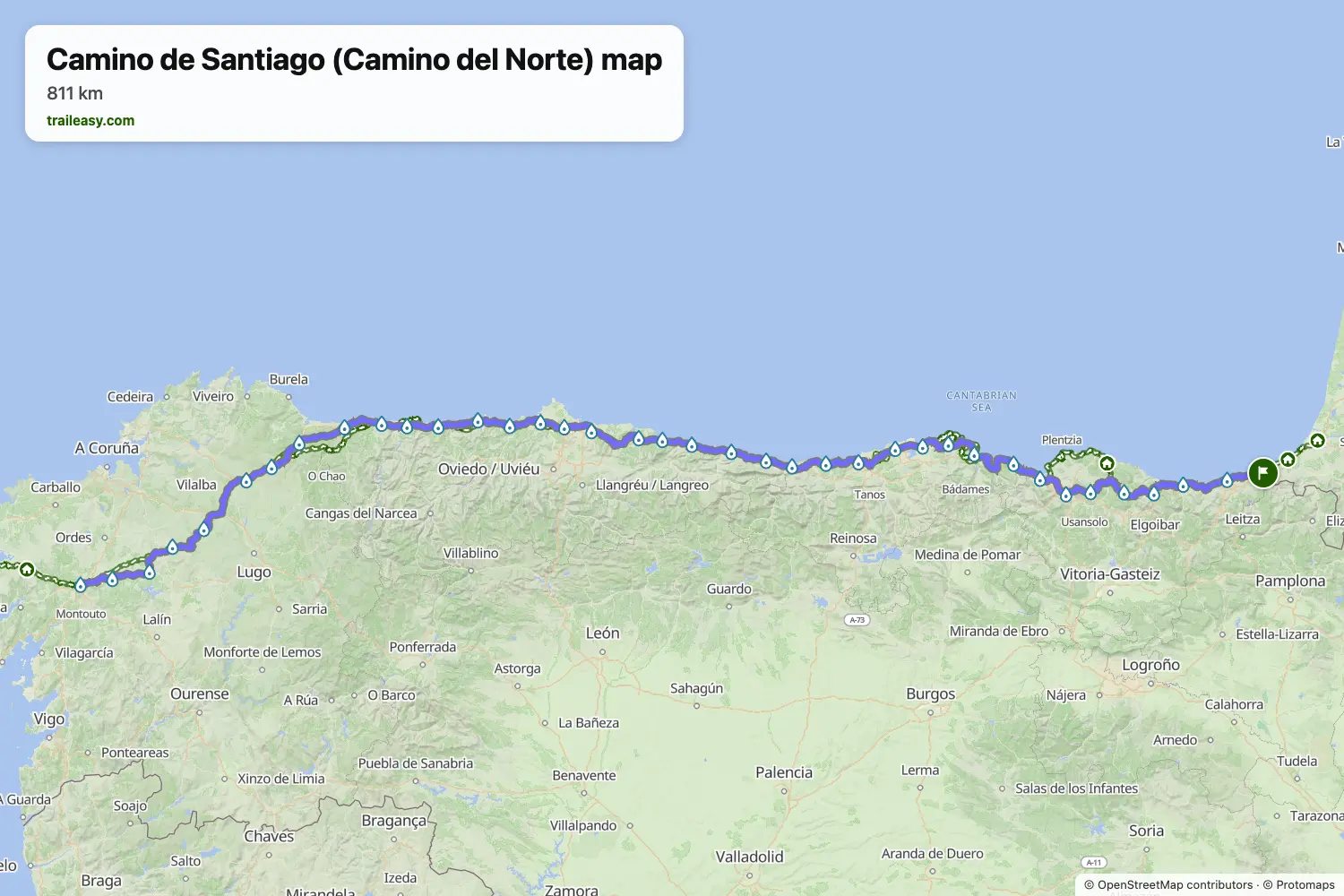
The interactive map shows the whole route, with accommodation, water and public transport along the way.
Camino de Santiago (Camino del Norte) route planner
Build a day-by-day itinerary in the route planner, find accommodations along the route, and download the GPX file.
Open the Camino de Santiago (Camino del Norte) route plannerBest time to go
- Best time1 Apr – 30 Jun, 1 Sept – 31 Oct
- Good time1 Mar – 31 Mar, 1 Jul – 31 Aug, 1 Nov – 30 Nov
- Possible, with care1 Dec – 29 Feb
April to June and then September and October are the best months, with the coast never hot and the albergues open without being full. July and August fill the beaches and the coastal albergues, and the humidity makes the climbs in and out of every river mouth harder than the distances suggest. From December to February many albergues close, the rain is persistent and the daylight is short.
Frequently asked questions
How difficult is the Camino del Norte?
Harder than the Camino Francés, though not because of any single climb. The stretch between Irún and Bilbao is the toughest week, since the path keeps dropping to sea level at every river mouth and hauling straight back up the headland on the far side, so a day with modest total ascent still feels like stair work. Surfaces punish you as well, because long sections of asphalt lane and concrete farm track through the Basque Country and Cantabria leave feet and knees more battered than the earth paths of the inland routes. Guidebook stages also run longer here, since the towns are further apart, and six to eight hours of walking is a normal day rather than a big one. None of it is mountaineering and the main line is waymarked well, but you want several months of regular walking behind you and boots already broken in before that first headland.
How long does it take to walk the Camino del Norte?
Five weeks of walking is the usual answer, working through roughly 32 guidebook stages from Irún to Santiago de Compostela. At five to seven hours a day that lands most people in the low thirties of walking days, and once travel at each end and a rest day or two are added, six weeks is the block of time worth booking off. Because the stages are lumpier and further apart than on the Francés, walkers who plan the daily rhythm they read about for the inland route usually finish a few days later than intended. If five weeks is out of reach, the route divides cleanly at the big cities, and San Sebastián, Bilbao, Santander, Gijón and Ribadeo all work as start or finish points with airports or trains close by. Walking only the final qualifying stretch for the Compostela means picking the route up in Galicia at Vilalba or Baamonde, which is about five days.
When should you walk the Camino del Norte?
June and September are the sweet spots, warm enough on the coast and clear of the worst of the pressure on beds. This is green Spain, and it is green because the Atlantic keeps it wet, so rain is possible in any month and a grey drizzly week in the Basque hills counts as normal rather than bad luck. July and August give the most reliable sunshine but coincide with the Spanish beach holiday, which fills the coastal towns with people who are not pilgrims and makes a bed the hardest thing on the route to find. April and May are quiet and lovely, though a number of Basque municipal albergues open only for high season, so the network on paper is thicker than the one you will actually find. Out of season the trip changes character: daylight runs out early, the Laredo estuary boat stops for the winter months, and enough village bars and small albergues close that food and beds need planning ahead.
Do you have to take a boat on the Camino del Norte?
Yes, three times, and a fourth water crossing is normally done by train. On the first day a one minute motorboat carries you over the harbour at Pasaia between Irún and San Sebastián, in Cantabria a small launch runs from Laredo across to Santoña, and later the Somo boat takes pilgrims over the Bay of Santander and lands them on the city waterfront. The Laredo one operates from roughly March to December, and when it is not running the way past the marshes is an inland loop through Colindres and Escalante. The fourth obstacle, the Ría de Mogro west of Santander, has no pilgrim boat at all, so walkers either hop the narrow gauge train for two minutes between Boo de Piélagos and Mogro or turn inland to the bridge at Puente Arce and add a couple of hours. Crossing the railway bridge on foot is illegal and pilgrims do get fined for it, so treat it as shut. Both workarounds are selectable variants in the Traileasy planner, the interior route through Escalante and the official line via Puente Arce, so an out of season walk can be laid out around whichever crossings are open.
Should you switch to the Camino Primitivo at Villaviciosa?
Only if you want mountains more than coast, since the two are genuinely different walks from that junction onwards. The waymarks part at Villaviciosa in Asturias, with the Norte continuing through Gijón and Avilés towards the Galician coast and a two day link running south to Oviedo, where the Primitivo starts. The Primitivo reaches Santiago sooner but climbs far more, crosses high open ground on the Hospitales route, and has long stretches with nothing in between. Staying on the Norte buys another week beside the sea, including the Asturian cliffs and the beaches around Ribadeo, before the route finally turns inland across Galicia. Walkers who have already done a coastal Camino tend to branch off, and people who came specifically for the Bay of Biscay tend to stay, so neither decision is the wrong one.
Should you book accommodation ahead on the Camino del Norte?
More than you would on the Francés, particularly anywhere near a beach in July and August. The albergue network here is thinner and further apart, often one hostel serving a town rather than a choice of five, and the public ones take no reservations, so the squeeze comes when a whole day's walkers converge on the same twenty or so beds. Summer compounds it, because this coast is also where Spain takes its own holidays, and in San Sebastián, Santander, Llanes and Ribadeo the pensions fill with families while prices climb with demand. A workable compromise is to fix the city nights and the small coastal stops a few days out and leave the Galician section loose, since beds get easier once the route leaves the sea. Opening seasons shift and several Basque municipal albergues run only in high summer, so confirm the year you are actually walking rather than trusting an older guidebook. The Traileasy planner lets you slide each night's stop along the route, so you can see before leaving home which stages end in a busy resort and reserve only those.
How expensive is the Camino del Norte?
Expect 40 to 55 euros a day, which puts it among the pricier Camino routes rather than the bargain pilgrimage people imagine. The mix of beds explains it, since the Basque Country and Cantabria lean towards private albergues and pensions at 20 to 30 euros while genuinely cheap municipal beds are scarcer and further apart than on the inland routes. Food softens the blow, because the pintxos bars of San Sebastián and Bilbao cost as much as you let them but a Cantabrian or Asturian menú del día is still good value. The daily figure climbs in July and August, when the budget beds go first and a private room in a beach town at short notice is priced for holidaymakers. Over the full walk that comes to roughly 1,300 to 1,900 euros, not counting flights or kit, and the daily rate drops once you reach Galicia, where albergues are cheaper and easier to find.