
Heidschnuckenweg
Sobre Heidschnuckenweg
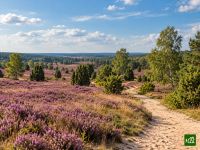
El Heidschnuckenweg cruza el brezal de Luneburgo, desde Fischbek, a las puertas de Hamburgo, hasta Celle y su palacio, y debe su nombre a las ovejas con cuernos cuyos rebaños pastan en el brezal. Recorre la mayor extensión de brezales del norte de Europa, la reserva sin coches que rodea Wilsede, enebros retorcidos y tranquilos valles fluviales. A finales del verano, la floración del brezo tiñe de morado todo el paisaje.
Heidschnuckenweg: mapa
El mapa interactivo muestra toda la ruta, con alojamientos, puntos de agua y transporte público a lo largo del camino.
Planificador de ruta: Heidschnuckenweg
Crea un itinerario día a día en el planificador de ruta, encuentra alojamientos a lo largo de la ruta y descarga el archivo GPX. Empieza con un ejemplo abajo o desde cero.
12-Day ItineraryMostrado abajo
The Heidschnuckenweg in twelve days built on the operator's stages, from the S-Bahn at Hamburg-Fischbek to the old town of Celle. The first day crosses the Fischbeker Heide and the beech woods of the Rosengarten to Dibbersen on the edge of Buchholz, and the second runs through Buchholz, past the Höllenschlucht and over the Brunsberg, then through the Büsenbachtal to Handeloh. The heath village of Wesel lies on the way to Undeloh, and from there the trail passes car-free Wilsede and climbs the Wilseder Berg, the high point of the walk, before dropping to Niederhaverbeck. The Behringer Heide leads to Bispingen, and the Luhe valley, past the river's source by the Timmerloher Heide, leads on to Soltau on the Böhme. Wietzendorf comes next, then a day over the Wietzer Berg, with its Löns memorial stone, to Müden on the Örtze. The short operator stage to Faßberg is folded into a day past Faßberg and through the juniper heath at Schmarbeck to Niederohe, by the Oberoher Heide, and the following day crosses the Haußelberg and passes Lutterloh on the way to Weesen. The Misselhorner Heide and the Tiefental lead to Dehningshof, a lone farmstead whose holiday farm, the Fuhrmanns-Schänke, serves no meals, so bring food for the evening and the next day. The last day is the operator's full final stage and the longest of the walk, past the Severloher Heide and the Wildecker Teiche and through the forest to Scheuen and Groß Hehlen, then along the Aller meadows into Celle.
Heidschnuckenweg: etapas
12 días, 227 km y 1661 m de desnivel positivo. Estas etapas siguen el itinerario «12-Day Itinerary». Ábrelo en el planificador para dividir o unir días y elegir dónde dormir.
- Etapa 120,4 km↑ 371 m · ↓ 264 m ·
6-7h con paradasHacia Dibbersen (Buchholz)
Noche en Sonnenblick - Etapa 221,3 km↑ 255 m · ↓ 313 m ·
6-7h con paradasDibbersen (Buchholz) Handeloh
Noche en Johmshof 1758 - Etapa 318,5 km↑ 128 m · ↓ 112 m ·
5-6h con paradasHandeloh Undeloh
Noche en Heiderose - Etapa 413,8 km↑ 141 m · ↓ 114 m ·
4-5h con paradasUndeloh Niederhaverbeck
Noche en Hotel Gasthof Menke - Etapa 516,7 km↑ 137 m · ↓ 165 m ·
5-6h con paradasNiederhaverbeck Bispingen
Noche en Flair Hotel Rieckmann Bispingen - Etapa 622,2 km↑ 109 m · ↓ 120 m ·
6-7h con paradasBispingen Soltau
Noche en Hotel Meyn - Etapa 721,3 km↑ 75 m · ↓ 73 m ·
6-7h con paradasSoltau Wietzendorf
Noche en Landgasthaus Wietzendorf - Gasthof - Etapa 814,1 km↑ 71 m · ↓ 78 m ·
4-5h con paradasWietzendorf Müden (Örtze)
Noche en Hotel Eichhornkobel - Etapa 917,0 km↑ 62 m · ↓ 41 m ·
4-5h con paradasMüden (Örtze) Niederohe
Noche en Haus Dübelsheide - Etapa 1021,2 km↑ 121 m · ↓ 139 m ·
6-7h con paradasNiederohe Weesen
Noche en Hotel- Restaurant „Im Wiesengrund“ GmbH & Co. KG - Etapa 1113,0 km↑ 106 m · ↓ 106 m ·
3-4h con paradasWeesen Dehningshof
Noche en Ferienhof Zur Alten Fuhrmanns-Schänke GmbH - Etapa 1227,3 km↑ 85 m · ↓ 108 m ·
7-8h con paradasDehningshof Celle
Cuándo ir
- Mejor época1 ago – 15 sept
- Buena época1 mar – 31 jul, 16 sept – 31 oct
- Posible, con precaución1 nov – 29 feb
Se puede recorrer todo el año: la ruta discurre por tierras bajas y nunca se aleja mucho de un pueblo. El brezo florece desde principios de agosto hasta mediados de septiembre, las semanas de más afluencia en los pueblos del brezal. Fuera de la floración el brezal está verde o pardo, pero en primavera florece la hierba algodonera en las turberas y los rebaños tienen corderos, y el otoño trae sus colores y caminos más tranquilos. De noviembre a febrero hay pocas horas de luz para las etapas más largas, que conviene empezar temprano, y puede haber escarcha o nieve en el brezal abierto.